Many entrepreneurs invest every month money in Facebook Ads Services without seeing real performance or additional customers. Likes exist. Impressions exist. But phones, leads and sales... not always.
Πρίν βγάλεις το πόρισμα οτι οι διαφημίσεις στο Facebook δε δουλεύουν, πάμε να δούμε τα πιο συχνά λάθη που βρίσκω σε λογαριασμούς όταν κάνω έλεγχο.
The problem is usually not the platform itself. The problem is the way the advertising strategy has been set up.
If until today you only boost posts from your phone, then it’s possible that you lose budget without realizing it. And this is often why many entrepreneurs decide to give management of social media and advertisements to an external partner who knows how to build a real development system. But if you run ads on your own and want to be better today we answer why Facebook ads don't bring you the sales you hope for.
You boost posts instead of using official Meta Ads Platform
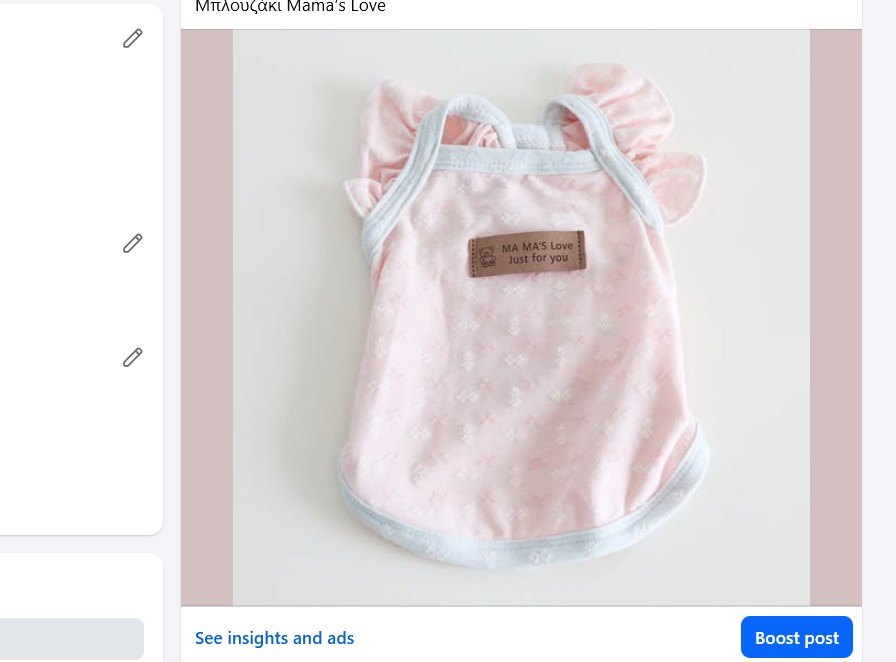
The most common mistake is the classic “Boost Post” through the Instagram pages or the platform. It's easy, fast and gives the feeling that the business is being advertised properly. In reality, however, and especially if you want to see sales increase in your eshop, the boost limits almost all the important tools that a serious advertising campaign needs.
When you boost Facebook or Instagram:
- you have no full audience targeting,
- You can't do proper retargeting,
- You don't control the placements properly,
- You don't see any material evidence of conversions,
- and you usually optimise for interactions instead of sales.
The result is to pay for likes and impressions without real business growth.
How to fix it
- Use Meta Ads Manager instead of a boost post.
- Set up campaigns targeting conversions or leads.
- Install Meta Pixel on your website.
- Create custom audiences & lookalike audiences.
- Watch metrics such as CPA, ROAS and conversion rate.
You don't use Funnel Marketing Properly
Most businesses advertise as if they are trying to sell to a “cold” audience from the first contact. But the customer needs stages until he trusts a brand.
A proper Facebook Ads strategy usually translates to:
- Top of Funnel (Awareness),
- Middle of Funnel (Consideration),
- Bottom of Funnel (Conversion).
If you show the same message to everyone, then you speak wrong to the wrong person at the wrong time.
Someone who just discovered you is not ready to buy immediately. It takes confidence, content and repetitive contact first.
How to fix it
- Split campaigns per funnel stage.
- Create different graphics per stage.
- Retageting those who watched videos or visited a site.
- Using lead magnets for an audience that is in the stage and has recognized his problem actively looking for the solution.
- Optimize campaigns for audiences that are ready to buy what you offer, i.e. for conversions.
You Don't Use The Platform's Target System
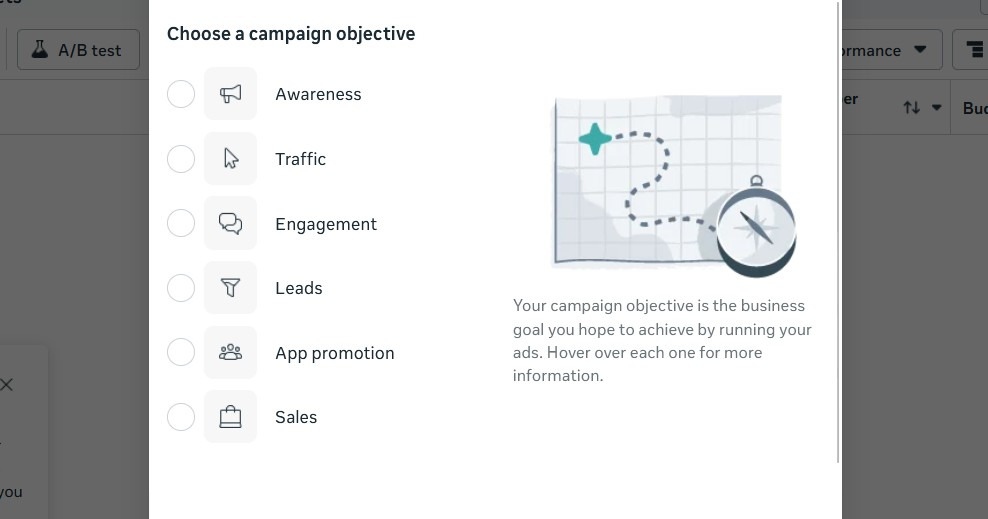
One of the biggest mistakes in Facebook and Instagram ads is that many businesses always choose the same campaign target, usually engagement or traffic – regardless of the actual business goal.
Meta works with machine learning. This means that the system “learns” what you want to achieve and tries to find people who are most likely to do just that action.
So if you choose: engagement, the platform will find people who like and comments.
If you choose: traffic, it will find people who click or read landing pages.
If your goal is:
- sales,
- leads,
- bookings,
- Applications,
then you need conversion-focused objectives.
Many small and medium-sized businesses are “burning” a budget because Facebook optimizes for the wrong behavior of users.
And here's the important thing: a high CTR (indicator showing appearances relative to clicks they get) doesn't necessarily mean sales. You may just attract users who easily click but never buy.
A good Meta Ads strategy uses different goals per stage funnel:
- Awareness for recognition,
- Video Views for engagement audiences,
- leads, to collect contact information
- conversions for sales
- Retargeting for reaching users that already know you.
So the system gets better signals and campaigns become more efficient with time.
How to fix it
- Choose a target based on a real business goal.
- Use conversion campaigns when you want sales.
- Connect website to Meta Pixel and Conversions API.
- Create different goals depending on the stage where the customer is.
- Leave time in the algorithm learning phase before making big changes.
Your Message Doesn't Speak to the Right Customer
One of the biggest problems in advertising on social media is the general message. Many businesses try to talk to “everyone” and ultimately do not touch anyone. The user must understand within a few seconds:
- What you offer,
- what concerns them,
- And why they have to deal with it now.
Small and medium-sized enterprises often use very general or “corporate” expressions that say nothing substantial to the customer.
How to fix it
- Write without jargon and complex words.
- Use specific benefits.
- Talk to the problems of the ideal customer.
- Put a clear call to action (CTA) on every advertisement.
- Adjust the message per audience segment.
Landing Page Doesn't Match the Advertisement
One issue that kills conversions to Meta Ads is inconsistency between advertising and landing page.
Users clicks on an advertisement because they are interested in a specific promise. If when the page opens sees a different message, different offer or chaotic experience, they leave immediately.
This creates cognitive dissonance and dramatically reduces conversions.
Inconsistency examples:
- another headline in advertising and another on the landing page,
- different offer,
- different graphics,
- slow loading on mobiles,
- unclear CTA.
Even if the CTR is high, sales will remain low if the funnel breaks after the click.
How to fix it
- Keep the same headline on ad and landing page.
- Use the same visuals and branding.
- Put offer eraly in the landing page.
- Optimize mobile speed.
- Add trust signals και testimonials.
Using Low Quality Creatives
In Facebook and Instagram ads, creative is the first thing the user sees. If you use low-quality creatives, the graphic does not directly get attention or appears wrong in preview, the ad loses efficiency before it even starts.
Many small and medium-sized enterprises upload:
- wrong graphics dimensions,
- videos that are cut in the Stories,
- graphics with excessive text,
- low resolution,
- or creatives that are not mobile-first.
The result?
- lower CTR,
- increased CPC,
- bad user experience,
- και χαμηλότερο quality score από τον αλγόριθμο της Meta.
Today, the largest percentage of traffic comes from mobile. This means that every creative must be designed first for mobile consumption and then for desktop.
Proposed Dimensions for Facebook & Instagram Ads
| Placement | Proposed dimensions | Aspect ratio |
| Instagram & Facebook Feed | 1080 x 1350 px | 4:5 |
| Instagram Stories | 1080 x 1920 px | 9:16 |
| Instagram Reels | 1080 x 1920 px | 9:16 |
| Facebook Stories | 1080 x 1920 px | 9:16 |
| Carousel Ads | 1080 x 1080 px | 1:1 |
| Facebook Right Column | 1200 x 1200 px | 1:1 |
| Video Feed Ads | 1080 x 1350 px | 4:5 |
Example of Bad vs Correct User Experience
Imagine a user is seeing an Instagram ad titled:
“30% in premium face cosmetics for only 48 hours”
The ad shows specific skincare products, clean offer and clear call to action.
The user presses the advertisement because he is interested in the offer.
When the page opens:
- there is no discount anywhere,
- the products of the advertisement are not displayed,
- the landing page is a general e-shop homepage,
- και ο χρήστης πρέπει να ψάχνει μόνος του τι ακριβώς διαφημιζόταν.
Σε εκείνο το σημείο δημιουργείται σύγχυση και χάνεται η εμπιστοσύνη.
Ο χρήστης σκέφτεται: «Μήπως πάτησα λάθος link;»
Στις περισσότερες περιπτώσεις θα φύγει από τη σελίδα μέσα σε λίγα δευτερόλεπτα.
In the right setup, when the user clicks on the ad:
- is landing exactly to the offer page,
- immediately sees -30%,
- The same products they saw in the creative are displayed.
- there is a clear purchase button,
- and the whole experience continues the same message of advertising.
This increases significantly:
- conversion rate,
- conversion rate,
- trust in the brand,
- and the chances of buying.
How to fix it
- Create mobile-first creatives.
- Use dimensions per placement correctly.
- Put the message above “fold”.
- Avoid exaggerating text in visuals.
- Test different hooks and formats.
If You Want to See What Proper Advertising System Can Bring to your Business
We can analyze: your existing advertising account, your creatives, sales funnel, campaign data, and the points you “lose” sales or leads. Because many times the problem is not the budget. It's the way the whole system behind advertising has been set up.
You Don't Know What Your Potential Customers Really Need to See
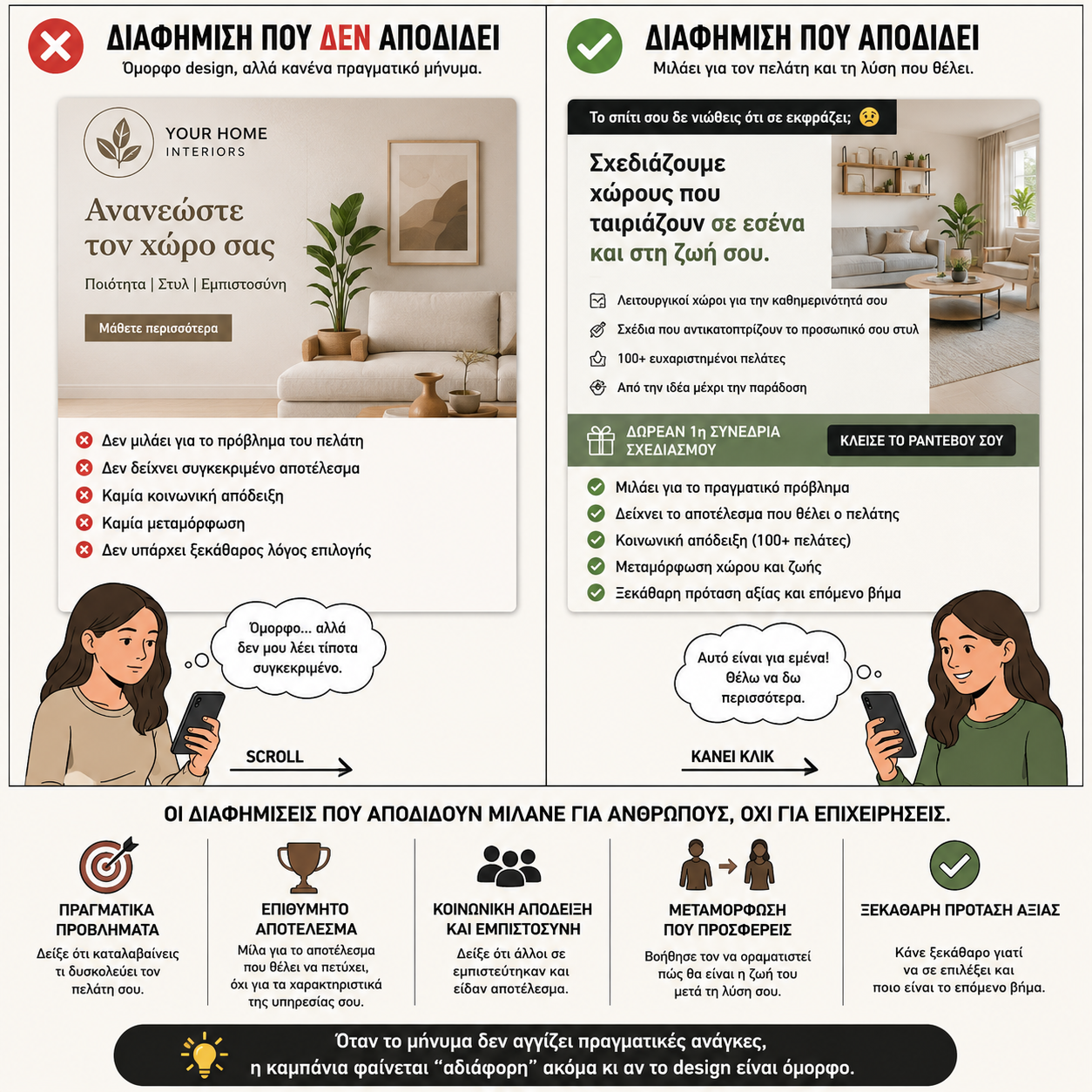
Many businesses create ads based on what they consider important, not what the customer really interests.
The customer, however, is not interested in:
- how “good” the company is,
- How many years you have been in the business,
- or how “passionate” you are with what you do.
What they want to see is:
- how to solve their problem,
- what are the results you deliver to them,
- how quickly,
- and why should he trust you.
Ads that perform best usually communicate:
- the real customer's problems,
- the result they want to achieve,
- social proof and trust,
- the transformation or change offered by the service or product;
- and a clear value proposition on why to choose the business.
When the message doesn’t touch real needs, the campaign seems “indifferent” even if the design is beautiful.
Example
An accounting firm writes:
“We provide high quality integrated tax and technical services.”
This is generic and says nothing substantial.
On the contrary, a message such as:
“Reduce the stress of the tax period and find out what your business can be legally spared.”
speaks directly to the real problem of the user.
How to fix it
- Focus on the customer's problems.
- Use clearly benefits.
- Add social proof and results.
- Write as your client speaks.
- Do customer research before you create ads.
Wrong Use or Very Low Budget
One of the biggest problems in Facebook and Instagram ads is that many small and medium-sized businesses expect serious results from a very small budget or constantly change campaigns before Meta's algorithm can collect enough data.
Meta is based on machine learning. This means that it needs:
- data,
- time,
- enough audience volume,
- and steady optimization,
to understand which users are more likely to be converting.
If:
- The budget is too small,
- there are too many ad sets,
- creatives are constantly changing,
- or edit the ad every 24 hours,
then the campaign remains permanently in learning phase and never stabilizes.
As a result:
- CPMs fluctuate,
- the lead per cost increases,
- the CPA increases
- ROAS decreases,
- and you notice “ups and downs” in performance.
According to official instructions of > Meta Business Help Center, the algorithm needs sufficient conversion signals per week to get out of the learning phase correctly. When an ad set does not gather enough optimization events, performance becomes less stable and makes it difficult to distribute properly.
The Most Common Mistake Of Small Businesses
Many entrepreneurs start like this:
- €5–10/day total budget,
- 5–6 different ad sets,
- many audiences,
- many creatives,
- many creatives,
In practice, however, every ad set gets such a small amount that Meta does not have enough data for optimization.
How to fix it
Follow the guide below. Every business is completely different, of course. A business with a product without much competition can work with smaller budgets and vice versa. This map is followed by us when we do not know a business and start the tests.
Proposed Campaign Structure By Budget
Budget: €10–15/Day
At this level of budget, the aim is simplicity and data collection.
Proposed Set Up
- 1 campaign
- 1–2 ad sets maximum
- 2–3 creatives per ad set
Ideal Goal
- Leads
- Messages
- Website Traffic for local businesses
In small budgets, Meta usually performs best when it has more public freedom and less fragmentation.
Budget: €20–50/Day
Here you can start real testing.
Proposed Set Up
- 1–2 campaigns
- 2–4 ad sets
- 3–5 creatives per ad set
Ideal Funnel Structure
- TOF campaign (for people who don't know our services).
- Retargeting campaign
Budget: €50–150+/Day
A full performance funnel can be set up here.
Proposed Set Up
- 3 funnel campaigns
- Multiple retargeting layers
- Dedicated testing campaigns
Proposed Number Of Creatives Per Ad Set
According to hrf="https://www.facebook.com/business?" target="_self"> Meta for Business excessive creatives' quantity with low budget can slow down optimization
Ideal Setup
| Daily Budget | Creatives per Ad Set |
| €5–15 | 2–3 creatives |
| €20–50 | 3–5 creatives |
| €50–150+ | 4–8 creatives |
What Usually Works Best Today
In many categories of small and medium-sized businesses, the best results in Facebook and Instagram ads often come from creative such as:
- short-form vertical videos
- videos where the owner or founder of the business appears,
- authentic UGC-style creatives that look like physical user content,
- before & after transformations
- authentic testimonials and customer experiences,
- Educational Reels with useful information,
- strong hooks like “problem → solution”.
Very "rigged" or overly corporate creative often have a worse performance than more authentic and physical content that looks organic within the user's feed.
The reason is simple: users on social media respond more to content that seems true, direct and human, not necessarily to something reminiscent of classic advertising.
If you need ideas to create social media posts for your business, read this article.
You Don't Know How to Read Ad Data
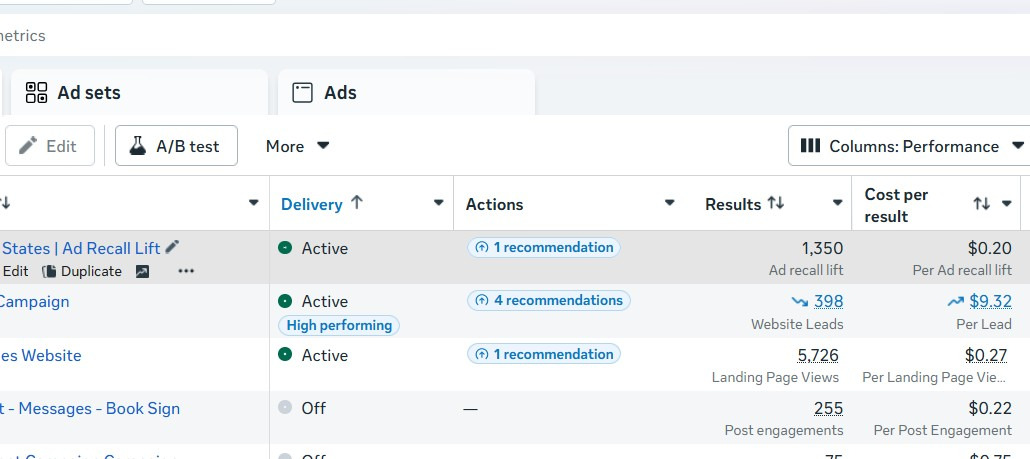
Many small and medium-sized businesses only see if an ad took likes, views or followers. But the real picture of a campaign is in the advertising data.
If you don't know how to interpret Facebook and Instagram Ads metrics correctly, you can:
- continue campaigns that do not pay off,
- Increases budget to the wrong creatives,
- or lose sales without understanding the reason.
The data shows how your audience reacts to creative, message and offer.
Example 1 – High Display Frequency
Example 1 – High Display Frequency
- High Frequency
- High CPC
- Low CTR
Then usually the same audience sees the advertisement many times and starts to get bored of it.
This often happens when:
- audience is narrow
- The creative has been shown repeated times,
- or the campaign runs for a long time without renewal.
In many cases, Frequency over 3–4 in a cold audience shows that a creative change or a new audience is needed.
Example 2 – Low Percentage Of Click (CTR)
If an ad has a low CTR (Click Through Rate), for example under 1%, then there is usually a problem in the creative or in the message.
A low CTR may mean that:
- the visual does not draw attention,
- the hook is not attractive enough,
- The audience does not consider the offer to be relevant.
In contrast, a higher CTR shows that advertising manages to stop scroll and generate interest.
Proper data analysis can significantly improve the performance of a campaign without necessarily a larger budget.
In the next detailed article we will see:
- What metrics really worth watching,
- what CTR, CPM, CPC, CPA and ROAS mean,
- and how to detect problems before they start to “burn” a budget.
How to fix it
- Watch CTR (click rate), Frequency (review frequency) and CPA (customer acquisition cost).
- Compare metrics per audience and creative.
- Audit when a creative starts to tire the audience.
- Keep weekly reporting with key KPIs.
- Make data-based decisions, not “sense.”
Do you want Ads that Bring Real Leads and Sales?
Most businesses do not have a product or service problem. They have a strategic advertising problem.
Today, Facebook and Instagram ads are needed:
- proper sales funnel,
- Proper creatives,
- proper targeting,
- Proper communication process with leads,
- and ongoing data analysis.
Χτίζουμε καθημερινά για μικρομεσαίες επιχειρήσεις στην Ελλάδα διαφημίσεις στο διαδίκτυο που φέρνουν απόδοση. Δες μερικά Case Studies.
We create integrated customer attraction systems with Facebook Ads ads that combine:
- Meta ads
- Creatives that aim to sell
- landing pages,
- funnels that collect leads
- retargeting,
- and communication scenarios for more sales closures.
In many cases, our campaigns have achieved from 3x to 8x advertising investment (ROAS), through proper strategy and continuous optimization.
We work with businesses that want:
- more quality leads
- lower cost of client acquisition
- better conversions percentage
- and advertisements that lead to real business results.
Συχνές Ερωτήσεις για Facebook & Instagram Ads
Πόσα χρήματα χρειάζομαι για να ξεκινήσω διαφημίσεις στο Facebook και το Instagram;
Το ιδανικό budget εξαρτάται από τον στόχο, τον ανταγωνισμό και τον κλάδο της επιχείρησης. Για πολλές μικρομεσαίες επιχειρήσεις, ένα αρχικό budget €10–30/ημέρα μπορεί να δώσει αρκετά δεδομένα για testing και optimization.
Γιατί οι διαφημίσεις μου παίρνουν likes αλλά όχι πωλήσεις;
Συνήθως αυτό συμβαίνει όταν η καμπάνια είναι βελτιστοποιημένη για engagement αντί για conversions ή leads. Επίσης μπορεί να υπάρχει πρόβλημα στο creative, στο audience ή στη landing page.
Είναι καλύτερο το Boost Post ή το Meta Ads Manager;
Το Meta Ads Manager προσφέρει πολύ περισσότερες δυνατότητες στόχευσης, optimization και ανάλυσης δεδομένων. Τα boost posts είναι περιορισμένα και συνήθως δεν είναι η καλύτερη επιλογή για σοβαρή ανάπτυξη επιχείρησης.
Πόσο χρόνο χρειάζονται οι διαφημίσεις για να αποδώσουν;
Οι περισσότερες καμπάνιες χρειάζονται χρόνο για να βγουν από το learning phase και να συγκεντρώσουν δεδομένα. Συνήθως απαιτούνται τουλάχιστον 7–14 ημέρες σωστού optimization πριν εξαχθούν ασφαλή συμπεράσματα.
Τι είναι το retargeting και γιατί είναι σημαντικό;
Το retargeting επιτρέπει να ξαναδείξεις διαφημίσεις σε άτομα που έχουν ήδη αλληλεπιδράσει με την επιχείρησή σου, όπως επισκέπτες website ή χρήστες που είδαν video. Είναι από τις πιο αποδοτικές στρατηγικές για αύξηση conversions.
Πώς καταλαβαίνω αν μια διαφήμιση αποδίδει;
Τα βασικά metrics που πρέπει να παρακολουθείς είναι:
- CTR (ποσοστό κλικ),
- CPA (κόστος ανά πελάτη ή lead),
- ROAS (απόδοση διαφημιστικής επένδυσης),
- Frequency (συχνότητα προβολής),
- και conversion rate.